Q. Watch a movie and write a review. Where was it made? Who is its intended audience? What kinds of cultural knowledge do you need to make sense of it? How does it relate to the ideas of cultural homogenisation/hybridisation.
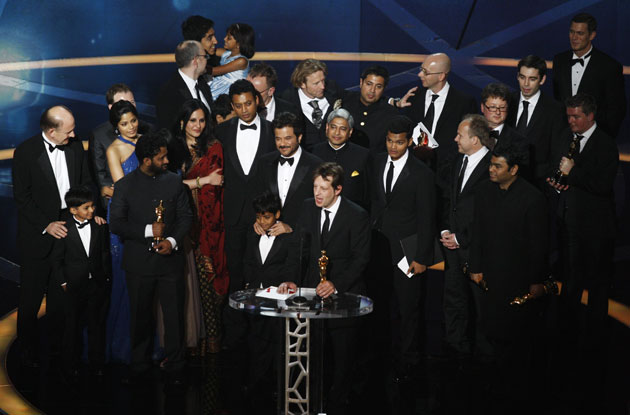
The movie “Slum dog millionaire” directed by Danny Boyle is a perfect example of cultural hybridisation- The blending of elements from a different culture to reach a global audience. They did this by intertwining westernised production values with ‘Indian cinema’ and popular cultural references to appeal to a global audience. It appeals to such a global audience because it portrays a universal message of love, triumph and adversity a classic storyline of ‘rags to riches’ which is easy to follow by everyone whether the language of the movie has been changed or not. The protagonist Jamal Malik an eighteen-year-old orphan from the slums of Mumbai, is one question away from winning one million dollars but is arrested on suspicion for cheating. The story unfolds, by going back in time where he reveals how he knew all the answer which steamed from life experiences and encounters. Dhavari, in Mumbai was the setting for “Slum dog millionaire” and is considered to be one of the biggest slums in Asia. The film does not shy away from the stark reality of poverty in India, showing the brutal and heartbreaking living conditions one endures on an everyday basis. Originally, the movie was intended for a western audience but close to a third of the dialogue is in Hindi with English subtitles.
As I mentioned before, I personally believed the movie would translate well in every culture but further research challenged my idea. At the beginning of the movie the scene where Jamel is in the hot seat on “Who wants to be a millionaire” didn’t quite translate well within India as it did in western culture and I’ll explain to you why this is the case. After doing some research there are set “caste” system which divides people in different social classes “lower” or higher.” The BBC wrote an article which said,
“The system bestowed many privileges castes while sanctioning repression of the lower class…It remained virtually unchanged for centuries, trapping people into fixed social orders from which it was impossible to escape.” So with this knowledge now I can understand why this didn’t work so well because in real life someone like Jamal would never have been given the opportunity to go on a show like this. So Indian people found it hard relate to because it is something so unrealistic/ unheard of. Although the movie does incorporate a lot of cultural elements sometimes certain scenes need to be adjusted so it makes more sense to that specific audience.
Cultural hybridity is all about understanding one another’s social context. Boyle did this by finding a balance between the two cultures. According to Jan (2009)in “Globalization of media: Key issues and dimensions, people “fear American ideas, images, and values will replace their own.” Although Boyle did follow a fundamentally American storyline the eastern audience is able to accept western values because he incorporated Bollywood elements such as song –dance and vise versa. This is further emphasized by Priyanka Sinha, in which she explains in The Guardian that Indian people “liked the movie, they liked the optimism,” she said. “It was very Bollywood always has these impossible twists and turns, these happy endings.” The global recognition the movie got showed the importance of cultural hybridisation in the film industry and showed a greater appreciation towards ‘Bollywood.’
References:
BBC News. (2018). What is India’s caste system?. [online] Available at: https://www.bbc.com/news/world-asia-india-35650616
Globalization of Media: Key Issues and Dimension. (2009). European Journal of Scientific Research, Vol.29 No.1, pp.66-75.
MacInnes, P. (2009). How Slumdog Millionaire is changing film-making in India. The Guardian. Available at: https://www.theguardian.com/film/2009/jun/04/slumdog-millionaire-india

 Mil's Blog